
Moths in Australia: Identification, Removal & Prevention
Discovering small holes in a favourite woollen jumper or opening a kitchen pantry only to find tiny webbing structures inside a bag of flour is a frustrating experience. While adult moths are often viewed as harmless fliers attracted to porch lights, their larvae are notorious storage and textile pests capable of causing extensive damage to household items.
Across Sydney homes and businesses, moth infestations are categorised into two distinct types: pantry pests that destroy dry food supplies and textile pests that feed on natural fabrics, carpets, and upholstery. This comprehensive guide covers how to identify the three most common indoor moth species in Australia, the hidden signs of their activity, practical prevention tips, and how professional pest management can permanently protect your property.
1. Myth vs. Reality: It’s the Larvae That Damage Your Property
A common misconception is that flying adult moths are actively chewing holes in clothes or devouring cereals. In reality, adult moths have poorly developed mouthparts, and many species cannot feed at all. They live only long enough to mate and lay eggs.
The real destruction is caused exclusively by the larval stage. Moth larvae are voracious feeders that require high amounts of protein and nutrients to sustain their rapid growth before pupating into adults.
2. Common Indoor Moth Species in Australia
Correctly identifying the type of moth active in your home is vital, as a pantry moth requires a completely different eradication strategy compared to a clothes moth.
The Indian Meal Moth (Plodia interpunctella)
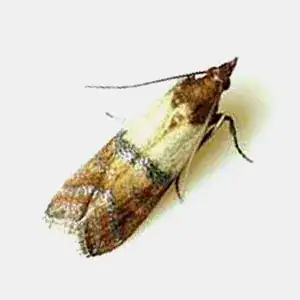
Commonly referred to as the Pantry Moth, this species is the leading cause of contaminated dry food goods in residential kitchens and commercial food storage spaces across New South Wales.
- Adult Appearance: Small insects measuring 8 to 10 mm in length, with a wingspan of 13 to 20 mm. Their unique two-toned wings easily identify them: the upper half is a pale yellowish-grey, while the outer half is a contrasting dark bronze, copper, or dark grey.
- Larval Stage: Off-white caterpillars with distinct brown heads, growing up to 17 mm long at full maturity.
- Diet and Damage: The female lays between 60 and 400 non-sticky eggs directly onto or near a viable food source. Once hatched, the larvae feed continuously on dry foodstuffs like cereals, pasta, rice, flour, spices, couscous, dried fruits, and pet kibble. They leave behind a characteristic silken webbing that binds the food particles together.
The Webbing Clothes Moth (Tineola bisselliella)
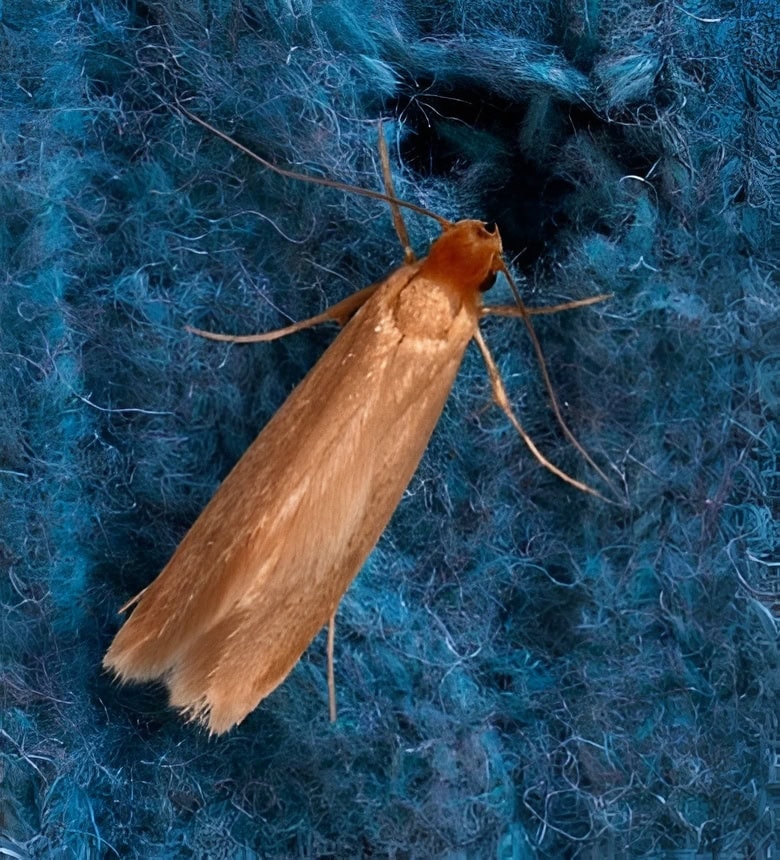
This is a notorious fabric pest that avoids brightly lit spaces, preferring to hide deep inside dark wardrobes, drawers, and under heavy furniture.
- Adult Appearance: Measuring 8 to 10 mm long with a uniform, shimmering golden-buff colour. Their wings feature a delicate fringe along the rear margins with no distinct spots or markings.
- Larval Stage: Creamy-white bodies with dark heads, growing up to 12 mm long. They build a patchy network of silken tubing over the materials they feed on.
- Diet and Damage: They feed exclusively on animal-derived keratin proteins. This means they target woollen clothing, silk sheets, natural furs, feathers, and authentic leather goods, leaving ragged holes and silken debris behind.
The Case-Bearing Clothes Moth (Tinea pellionella)
Similar in destructive capability to the webbing clothes moth, this species has a unique survival mechanism that makes the larvae easy to identify but difficult to spot at first glance.
- Adult Appearance: Silvery-buff bodies measuring 7 to 10 mm long, featuring three distinct dark spots on their forewings.
- Larval Stage: Creamy white with a dark head, reaching up to 10 mm long.
- The Case: The larva constructs a portable cylindrical case made of silk and fragments of the material it is feeding on. It carries this protective tube wherever it travels, feeding from either end and enlarging the case as it grows. They frequently chew holes in curtains, wool carpets, upholstered furniture, and hanging garments.
3. How Professionals Remove Moth Infestations
When a moth infestation spreads throughout a home’s structural gaps, deep closet corners, or pantry voids, everyday retail traps are rarely enough. Pheromone sticky traps only capture adult males, leaving the egg-laying females and active larvae untouched.
A professional approach follows three distinct steps:
Comprehensive Site Inspection
Technicians trace the source of the infestation by systematically inspecting food pantries, checking closet seams, lifting carpet edges, and examining dark spaces behind furniture to locate the primary breeding grounds.
Target Eradication Treatments
Depending on the species identified, professionals use targeted control measures:
- For Pantry Moths: Applying safe treatments to structural crevices and shelving joints after infested foodstuffs are cleared, breaking the lifecycle without contaminating prep areas.
- For Clothes Moths: Using professional-grade residual insecticides or localised ULV (Ultra-Low Volume) misting treatments in wardrobes and floor perimeters to reach deep into hidden voids where larvae feed.
Preventive Remediation
Applying long-term insect growth regulators (IGRs) that prevent any surviving larvae from successfully pupating into breeding adults, ensuring the population is entirely shut down.
4. Practical Prevention Tips for Homeowners
Maintaining a clean environment and implementing a few simple structural adjustments can keep your home safe from new moth infestations.
- Use Airtight Storage Enclosures: Transfer all dry pantry goods like flour, grains, nuts, and cereals out of open cardboard boxes and plastic bags into thick, airtight glass or hard plastic canisters.
- Clean Textiles Before Seasonal Storage: Before packing away winter woollens or heavy bedding, wash them thoroughly or have them dry-cleaned. Clothes moths are heavily drawn to invisible traces of sweat, body oils, and food stains on fabrics.
- Vacuum Regularly and Deeply: When vacuuming, pay special attention to dark areas underneath heavy furniture, along skirting boards, and inside the base of built-in wardrobes where natural dust and lint accumulate.
- Inspect Incoming Dry Goods: Check packaging at the supermarket before purchasing. Avoid items with small tears, pinholes, or faint internal webbing signs along the sealed plastic edges.
Protect Your Home and Belongings Today
Whether you are dealing with contaminated food supplies in the kitchen or damage to your wardrobe, acting quickly prevents a minor moth problem from turning into a major financial loss.
Get in touch with the experienced team at Forensic Pest Management Services to book a comprehensive inspection and arrange a long-term solution for your home.