
The Ultimate Guide to Australian Ants: Identifying, Preventing, and Eliminating Household Ant Infestations
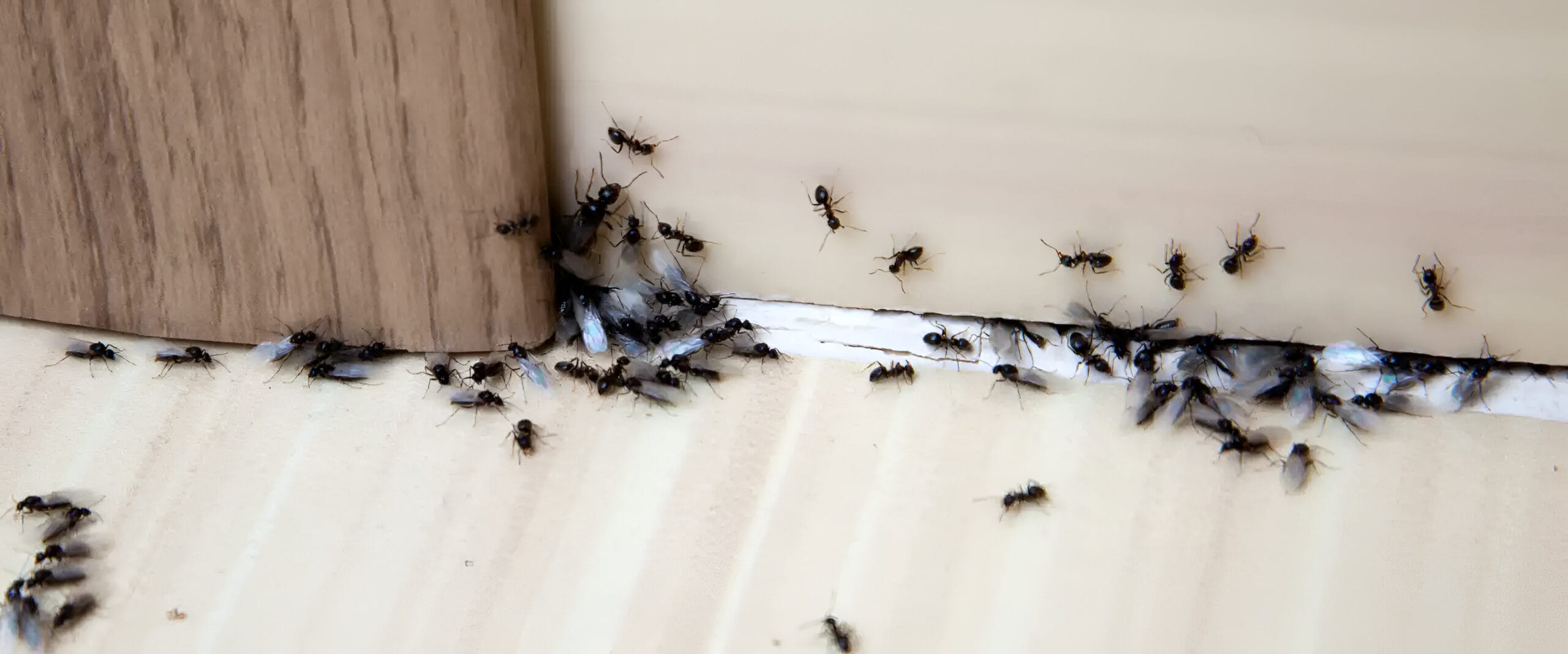
It starts with just one or two scouting insects wandering across your kitchen bench. But within a matter of hours, that solitary pair can turn into a frantic, trailing highway of hundreds of ants marching directly toward your food pantry or nesting inside your walls.
In Australia, particularly across urban and suburban Sydney, ants are the most frequent household invaders. While they might seem like a minor, unavoidable nuisance at first glance, a growing colony can contaminate food, damage structural timbers, undermine paved pathways, and cause significant frustration.
To protect your property, you need to understand that an ant problem is rarely just a surface issue. This comprehensive guide breaks down the complex nature of ant colonies, profiles the three most common species invading Sydney homes, and outlines how professional ant pest control can eliminate them for good.
The Complex World of a Highly Social Pest
To successfully get rid of ants, you have to realise that you are not fighting isolated insects; you are fighting a highly organised, deeply intelligent super-organism.
Just like humans, ants are intensely social creatures that live in complex, permanent communities known as colonies. A single colony can range from a few dozen ants to hundreds of thousands, typically hidden away in soil, rotting timber, wall cavities, or beneath structural concrete paths, garden rocks, and bricks.
Anatomy of an Ant
While species vary in size and colour, all ants share distinct physical characteristics that differentiate them from other crawling insects:
- Distinct Waist: They have an obvious, narrow constriction (known as a pedicel) between their thorax and abdomen.
- Elbowed Antennae: Their antennae are distinctly bent or “elbowed”, which they use to pick up chemical scent trails.
- Wings: Reproductive ants (queens and kings) possess two pairs of unequal wings used during swarming seasons.
- Compound Eyes: They feature a pair of compound eyes that, depending on the species, are highly sensitive to light and movement.
Meet the Culprits: Three Common Ant Species in Sydney
Different ant species require entirely different baiting and eradication strategies. The text below outlines the physical profiles, nesting habits, and dietary preferences of the three most common household ant pests in New South Wales.
1. The Black House Ant (Ochetellus glaber)
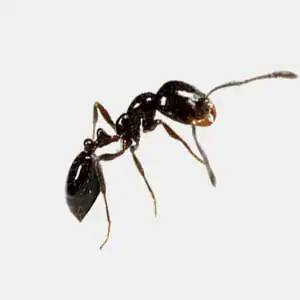
This is the classic, shiny nuisance insect that most homeowners spot trailing along window sills and kitchen splashbacks.
- Appearance: As the name implies, they are a deep, glossy black. They possess a long, slender body shape and are generally quite small, measuring between 2.5 mm and 3.0 mm in length.
- Nesting Preference: Black house ants are incredibly opportunistic nesters. They will readily set up camp inside wall cavities, roof voids, hollow fences, old woodwork, masonry cracks, external concrete pathways, and rotted garden logs.
- Diet: Armed with chewing mouthparts, they forage extensively throughout homes. While they will eat a variety of scraps, they have a strong preference for sweet substances; liquid sugar, honey, fallen fruit juices, and syrups are their primary targets.
2. The Coastal Brown Ant (Pheidole megacephala)
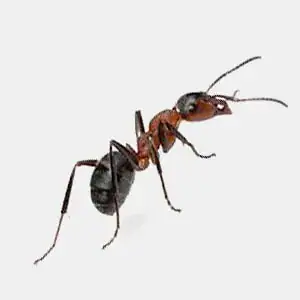
Also known as the big-headed ant, this introduced species is highly aggressive and notorious for creating massive, multi-queen super-colonies that take over entire properties.
- Appearance: These ants are smaller, measuring between 1.5 mm and 2.5 mm. They are a light yellowish-brown to dark brown colour. A unique characteristic of this species is their distinct “two-tier” worker caste system consisting of minor workers and major “soldiers” who possess disproportionately massive heads used to crush food.
- Nesting Preference: Coastal brown ants love moisture and structural crevices. They commonly nest behind internal skirting boards and window architraves, inside cavity walls, inside active termite mud tracks, and beneath outdoor brickwork and paving slabs, often pushing up large mounds of sand as they excavate.
- Diet: Unlike the sugar-loving Black House Ant, Coastal Brown Ants heavily prefer foods of animal origin. They actively hunt for dead insects, meat particles, kitchen grease, fats, and oils.
3. The Carpenter Ant (Camponotus spp.)
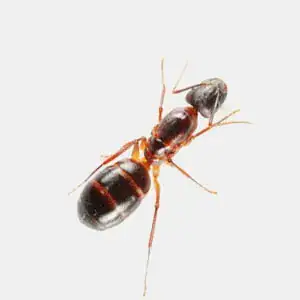
The largest of the common household ants, Carpenter Ants are a serious threat because of their destructive nesting habits.
- Appearance: These ants are noticeably larger, ranging from 7.0 mm to a substantial 12.0 mm in length. Their colouring is highly variable, ranging from solid black and dark brown to a distinct reddish-brown hue. They have a smoothly rounded thorax and a distinct single node on their waist.
- Nesting Preference: Carpenter ants do not actually eat wood, but they aggressively chew through it to excavate smooth, clean galleries for their nests. They are heavily drawn to decayed, moist, or water-damaged timber, meaning they are frequently found in damp subfloors, wall cavities near leaking pipes, or old tree stumps.
- Diet: They are primarily nocturnal foragers that will travel considerable distances from their main nest to find food. They feed on live and dead insects, sweet honeydew produced by garden aphids, and general household organic waste.
Why DIY Ant Treatments Frequently Fail (The Trap of Repellent Sprays)
When a home or business owner sees a line of ants, the immediate reaction is to grab a can of supermarket surface spray and blast them. This is the single biggest mistake you can make.
Most over-the-counter surface sprays are classified as “repellents”. They will instantly kill the few dozen ants you can see on the bench, but the chemical residue acts as a warning barrier to the rest of the colony. When the colony detects a threat to its foragers, it triggers a survival mechanism known as budding.
During budding, the main nest fragments. Multiple queens take groups of workers and scatter deep inside your wall cavities to form several independent satellite colonies. What started as a single localised ant problem in your kitchen can quickly transform into a multi-room infestation throughout your entire home.
Proactive Prevention: How to Ant-Proof Your Property
Eradicating an active infestation requires professional systems, but you can dramatically reduce your property’s vulnerability by following this structural and environmental prevention checklist:
- Eliminate Food Access: Wipe down kitchen benchtops, sinks, and dining tables daily to remove micro-traces of sugar and grease. Store open pantry items, especially sugar, cereals, and pet kibble, in heavy-duty glass or plastic containers with airtight rubber seals.
- Manage Moisture: Fix dripping taps, leaking plumbing lines, and faulty roof gutters immediately. Ants, particularly Carpenter Ants, require consistent access to moisture to sustain their larvae.
- Seal Structural Entry Points: Inspect your building’s exterior. Seal cracks in brickwork, plug gaps around external pipe penetrations with silicone sealant, and ensure door seals and window screens fit tightly.
- Keep a Clean Perimeter: Trim tree branches and shrubs back so they do not touch your roof or exterior walls, as these act as natural bridges for foraging ants. Clear out piles of rotting wood, leaf mulch, and unused bricks near your home’s foundation.

Why Professional Ant Pest Control is the Only Real Solution
To eliminate an ant infestation, you must destroy the queen and the hidden heart of the nest. Professional pest managers achieve this using advanced, non-repellent chemical technology and specialised baits.
Non-repellent treatments are completely undetectable to the colony. Foraging worker ants walk through the invisible treatment zone and pick up the active ingredient without knowing it. Because ants are fastidious groomers and constantly share food within the colony (a process called trophallaxis), the foraging workers carry the treatment deep into the heart of the nest, passing it directly to the larvae and the queens. Within days, the entire colony collapses from the inside out.
If you are tired of dealing with lines of ants returning week after week, it is time to stop guessing with ineffective DIY sprays.
Take Back Your Home Today: Protect your property, safeguard your food prep areas, and enjoy a completely pest-free environment. Call the expert team at Forensic Pest Management Services on 1300 360 457 now to schedule a thorough, professional ant inspection and eradication treatment.