
Bird Mites & Lice in Australian Homes: Identification, Symptoms & Control
Discovering an unexpected pest infestation in your home can be incredibly unsettling, especially when the culprits are nearly invisible to the naked eye. While many homeowners are familiar with standard seasonal pests like ants, spiders, or rodents, dealing with bird mites can be a confusing and uncomfortable experience.
Often colloquially referred to by Australians as bird lice or “bird lites”, these tiny parasites frequently make their way into residential properties across the country. The issue usually begins when native or feral birds set up nests in roof voids, wall cavities, eaves, or under solar panels. Once the birds leave the nest, the remaining parasites look for a new host, bringing them directly into contact with human occupants.
Understanding how to identify these microscopic intruders, recognising the signs of their presence, and knowing how to safely eliminate them is crucial for maintaining a healthy, comfortable home.
What Are Bird Mites? An Identification Guide
So, what exactly are bird mites? Belonging to the arachnid family, these ectoparasites (parasites that live on the outside of their host) feed primarily on the blood of birds. They are most commonly associated with common urban bird species found throughout Australia, including feral pigeons, common Myna birds, and starlings.
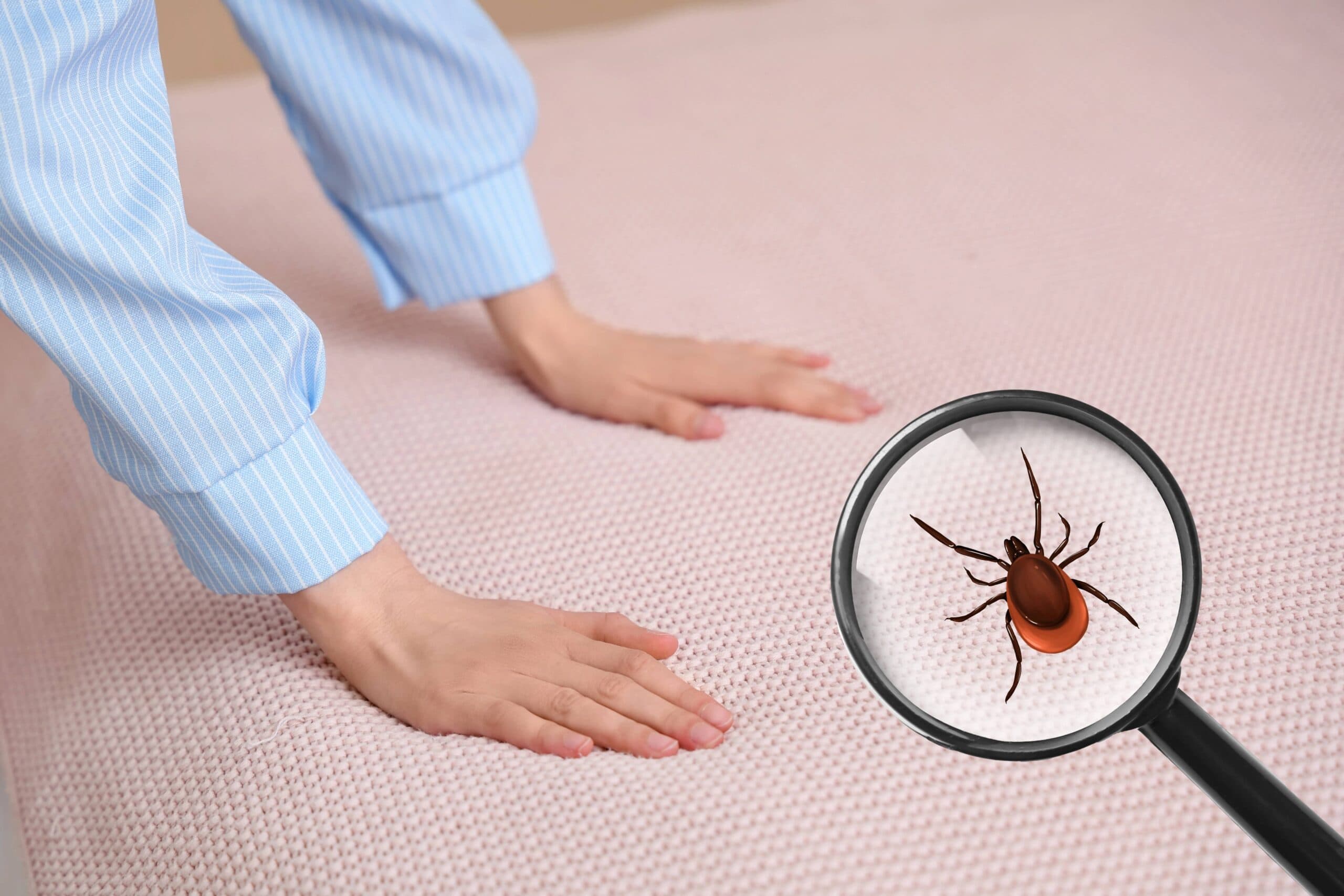
Physically, bird mites are tiny, oval-shaped parasites that measure a mere 0.1mm to 2.0mm in length. Because of their minuscule size, they can easily be mistaken for specks of dust moving across a windowsill or a wall. They have eight legs and a sparse covering of short, fine hairs across their bodies.
One of their most defining visual characteristics is their colour transformation:
- Unfed: They are nearly transparent, creamy-white, or pale grey, making them exceptionally difficult to spot on light-coloured surfaces.
- Fed: After ingesting a blood meal, their bodies swell slightly and turn a distinct reddish-brown or dark mahogany colour.
Bird Mites vs. True Bird Lice: Setting the Record Straight
In everyday Australian language, the terms “bird lice”, “bird lites”, and bird mites are often used interchangeably to describe the same irritating problem. However, from a biological standpoint, true bird lice and mites are completely distinct organisms.
True bird lice are wingless, six-legged insects that live permanently on the feathers of birds, feeding on dander and feather debris rather than blood. Most importantly, true bird lice do not bite humans and cannot survive off their avian hosts.
Therefore, when homeowners suffer from an outbreak of biting pests indoors following a bird nesting problem, the true culprits are always bird mites. These eight-legged arachnids live within the nesting materials rather than permanently on the bird, allowing them to easily migrate into human living spaces.
The Lifecycle and Breeding Habits
Because bird mites have a remarkably short lifecycle, localised populations can explode in numbers over a very brief period. Under optimal warm and humid conditions, which are characteristic of many coastal and suburban Australian environments, their entire lifecycle from egg to breeding adult takes approximately 7 days.
Female mites lay their eggs directly within the nesting material of their avian hosts or on the birds themselves. These eggs hatch within just three days into larvae, which rapidly progress through nymphal stages before reaching maturity. This high-speed reproduction cycle means that a single bird nest in an roof space can easily become the launching pad for thousands of mites within a matter of weeks.
How They Enter Australian Homes
The transition of bird mites from avian hosts to human environments follows a highly predictable pattern linked to bird breeding seasons.
When pest birds construct nests in protected architectural spaces such as residential roof voids, downpipes, gaps in fascia boards, or underneath solar panel arrays, the mites feed on the blood of both the adult birds and their unfeathered chicks.
The real trouble for homeowners begins immediately after the young birds fledge and abandon the nest. Deprived of their primary hosts, the abandoned bird mites are left without a food source. Driven by survival instincts, thousands of hungry mites begin migrating away from the empty nest in search of a new host.
They are highly mobile and easily navigate through:
- Ceiling roses and light fixtures
- Gaps around ducted air conditioning vents
- Microscopic cracks in plasterboards
- Open windows and door frames
As they spread throughout bedrooms, lounge rooms, and home offices, they inevitably encounter humans and domestic pets.
Symptoms of a Bird Mite Infestation
While these parasites cannot survive permanently or reproduce on human blood alone, they will absolutely bite humans out of necessity when their avian hosts are gone.
When bird mites bite humans, they inject a small amount of saliva into the skin to prevent blood clotting while they feed. This saliva triggers an immune response in human skin, leading to:
- Intense Itching: The itchiness is often described as severe and persistent, frequently worsening at night or in warm conditions.
- Rashes and Welts: Bites typically appear as small, red, raised bumps or crawling papules, often clustered together on the arms, shoulders, neck, and chest.
- A Crawling Sensation: Homeowners often report a distinct, highly unsettling feeling of insects crawling across their skin, even when nothing is visibly present.
It is important to note that scratching these intensely itchy welts can break the skin surface, opening the door to secondary bacterial skin infections that require medical attention.

Prevention and Professional Control
Eradicating bird mites permanently requires a dual approach: eliminating the immediate indoor population and removing the source of the infestation so they cannot return. Because they are so small and hide in deeply recessed spaces, standard DIY surface sprays rarely provide a long-term solution.
A professional pest control strategy generally involves:
- Source Identification: Locating all active and abandoned bird nests within the building footprint.
- Nest Removal and Sanitation: Safely removing the nesting material using personal protective equipment (PPE) and sanitising the area to kill remaining mites and pathogens.
- Targeted Insecticide Treatments: Applying specialised residual insecticides or dusts to ceiling voids, wall cavities, and entry points where mites migrate.
- Physical Bird Proofing: Installing heavy-duty mesh, bird spikes, or solar panel blocking guards to ensure pest birds cannot re-nest in the future.