

Bird Spikes vs Bird Netting: Which Bird Control Solution Is Better?
Feral birds, particularly pigeons (Columba livia), Indian mynas (Acridotheres tristis), and seagulls, have adapted exceptionally well to our urban environments. While a single bird resting on a ledge may seem harmless, a flock that decides to roost, nest, and breed on your property can quickly become a significant financial and structural liability.
From the architectural blocks of industrial hubs to modern residential estates, bird activity compromises aesthetics, creates major health risks, and damages infrastructure. Their droppings are highly acidic and will corrode paint, concrete, and roofing membranes over time. Furthermore, built-up nesting materials can block stormwater gutters, causing interior flooding during heavy downpours.
Home and business owners looking to protect their property are typically presented with two industry-standard physical barriers: bird spikes and bird netting. Both belong to the frontline category of professional bird control solutions, but they operate differently, suit different architectural profiles, and involve distinct installation strategies.
This educational guide explores the pros, cons, and mechanics of both options, detailing the specific value of pigeon spikes for roofs, heavy-duty exclusion netting, solar panel bird proofing, and specialised commercial bird control programs.
1. What Are Bird Spikes? Understanding the System
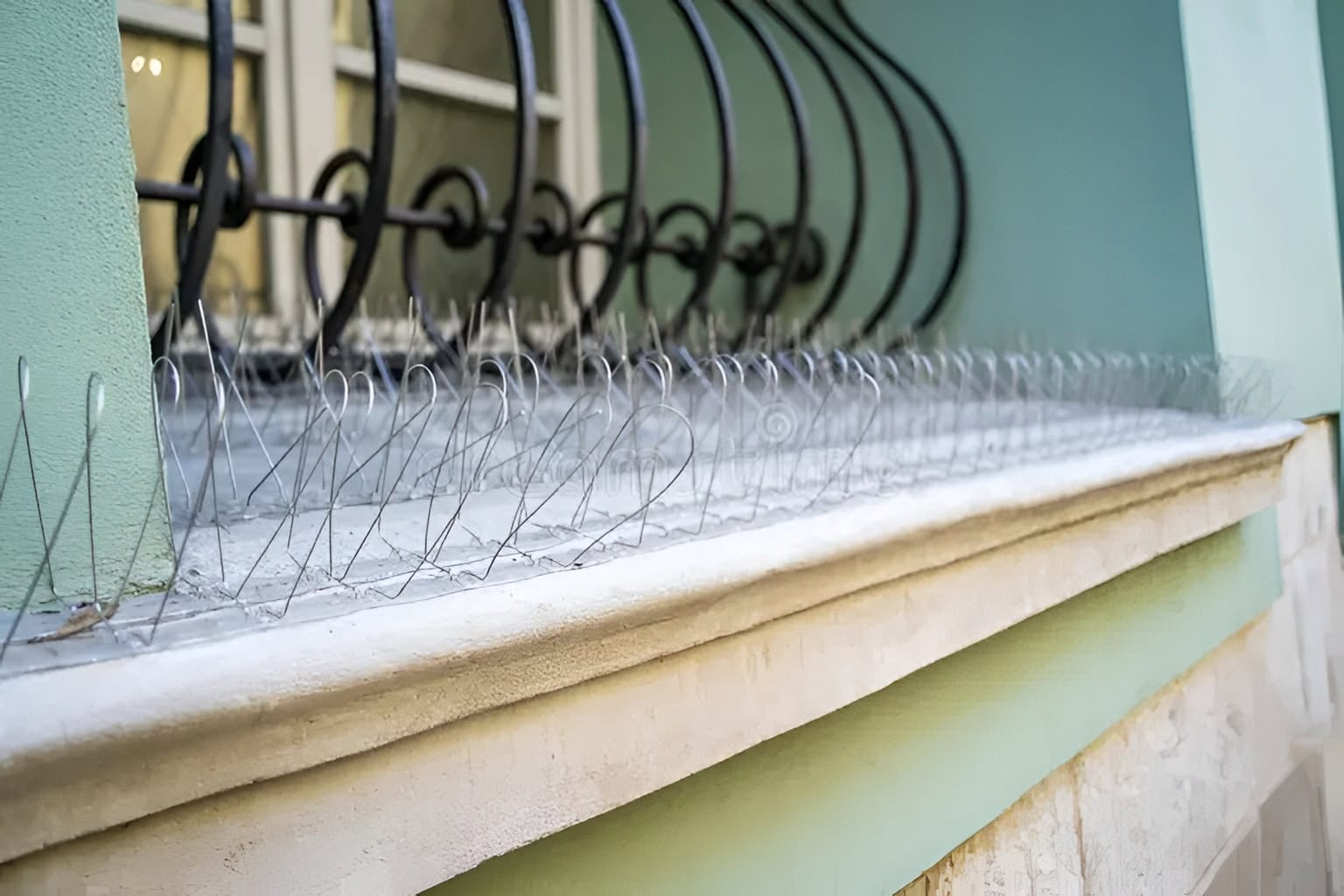
Despite their aggressive appearance, bird spikes are a completely humane, non-lethal deterrent designed to discourage birds from landing, not to harm them. They do not stab or pierce the birds; instead, they create an unstable obstacle course that makes it virtually impossible for large birds to land, roost, or settle.
Material and Physical Design
Modern spikes consist of long, thin, needle-like rods attached to a durable base strip.
- The Rods: Premium systems use marine-grade stainless steel wire (Grade 316), which resists harsh UV exposure and coastal saltwater corrosion. Economy versions use heavy-duty polycarbonate plastics.
- The Base: The rods are arrayed along a flexible, clear UV-protected polycarbonate base. This base strip can be snapped to specific lengths or bent to match curved structural elements like arches and sign letters.
- The Array: The spike arrays are configured in different widths (ranging from narrow 50mm single rows to extra-wide 200mm multi-angled patterns) to match the surface depth of the ledge being treated.
How They Operate
Birds naturally seek out flat, stable, elevated spots to rest, scan for food, or shelter from ground-level predators. When pigeon spikes for roofs are installed along an exposed ledge, they break up that flat surface. When a bird attempts to land, its breast or feet make contact with the springy, angled wire rods, forcing it to find an alternative location.
2. What Is Bird Netting? Total Area Exclusion
Where spikes focus on protecting specific narrow lines, bird netting takes a macro approach: total area exclusion. It creates an absolute physical wall that completely seals off large, open architectural spaces, preventing pest birds from gaining access to internal areas.
Material and Physical Design
Professional-grade bird netting is built to withstand extreme environmental stress.
- The Netting Yarn: It is manufactured from high-tensile, multi-strand polyethylene twine, which is thoroughly pre-stretched and treated with heavy UV stabilisers. It is flame-retardant and chemically inert.
- The Mesh Sizes: Netting comes in specific mesh openings designed to target different species. A 50mm mesh is the industry standard for blocking pigeons, while a smaller 19mm mesh is required to exclude tiny pest birds like sparrows and starlings.
- The Tension Framework: A net is only as good as the infrastructure holding it up. Technicians drill stainless steel anchor bolts into the building’s perimeter structure, run a heavy-duty stainless steel wire cable through those anchors, and use turnbuckles to tension the wire tightly. The netting is then permanently secured to this perimeter cable using specialised steel hog rings.
How It Operates
Netting turns an open space into an enclosed vault. It does not try to change the bird’s landing behaviour on a specific beam; instead, it prevents the bird from flying into recessed architectural zones, light wells, structural undercrofts, loading docks, and factory ceilings.
3. Direct Head-to-Head Comparison: Spikes vs. Netting
To determine which of these premium bird control solutions is ideal for your specific project, look at how they compare across key operational variables:
Target Bird Species (Size Matrix)
- Spikes: Spikes are optimised for larger pest birds such as pigeons, crows, and seagulls. They are highly ineffective against small birds. In fact, tiny sparrows or starlings can comfortably hop between the spikes and use the steel pins as a secure structural skeleton to anchor their nests, compounding your problem.
- Netting: Netting is a universal solution. Provided the correct mesh size is selected (e.g., 19mm), netting creates an impassable shield against all birds, regardless of size.
Pest Pressure Levels
Pest pressure refers to how committed the birds are to a specific location.
- Low-to-Medium Pressure (Roosting/Loafing): Birds use the ledge occasionally during the day to rest or look for food. Bird spikes are perfect for these zones.
- High Pressure (Nesting/Breeding): Birds were born there or have active nests. Their biological drive to return is incredibly powerful. Spikes often fail in high-pressure zones because nesting birds will drop twigs and leaves over the pins until they create a flat, elevated platform. Netting is the only physical barrier capable of defeating high pest pressure.
Architectural Visual Impact
- Spikes: Spikes offer a low-profile aesthetic. When installed correctly along high ledges, the clear base and thin steel pins blend into the building’s profile, making them virtually invisible from ground level.
- Netting: Netting covers an entire face or opening. While modern black twine is designed to blend into shadows, it remains visually noticeable, which may conflict with heritage building aesthetics or residential sightlines.
Installation Surface Adaptability
- Spikes: Spikes are highly versatile for narrow linear paths. They are easily fixed to pipes, window sills, parapets, security cameras, and structural steel beams using premium polyurethane adhesives or self-tapping screws.
- Netting: Netting requires structural anchor points. It cannot be easily installed on a single flat ledge; it requires an open three-dimensional cube or deep recess (like a balcony, awning undercroft, or warehouse ceiling) to be effective.
4. Specialised Commercial Bird Control Applications
For industrial facilities, logistics hubs, and retail shopping centres, bird infestations present immediate operational, safety, and regulatory health risks. Bird droppings contain nitrogen, which feeds harmful fungal spores, leading to severe respiratory conditions such as Histoplasmosis and Psittacosis if inhaled via HVAC units. Furthermore, wet bird droppings on polished warehouse floors create a major slip-and-fall hazard for staff.
Implementing effective commercial bird control involves auditing the facility’s design to deploy the correct combination of systems:
Loading Docks and Under-Awning Netting
Large distribution centres feature open loading bays that remain accessible for hours. Pigeons fly inside to nest on overhead fire sprinkler pipes, structural steel columns, and cable trays. Total area exclusion netting slung horizontally across the ceiling structure is the standard recommendation for these spaces, sealing off access to the entire roof infrastructure.
Parapets, Signage, and Structural Ledges
For the exterior street-facing elements of a business, bird spikes are the ideal choice. Installing stainless steel spikes along the top edge of corporate signage, external window ledges, and architectural trim prevents birds from sitting above pedestrian walkways, protecting customers and keeping footpaths clean.
5. Residential Focus: Solar Panel Bird Proofing
As clean energy continues to grow across Australia, a modern bird threat has emerged: pigeons nesting under residential solar arrays. The gap between your solar panels and the hot metal roof tiles creates a sheltered environment that protects birds from predatory hawks, wind, and rain.
Pigeons gather in large numbers under the arrays, causing several problems:
- Thermal Heat Spikes: Built-up nesting debris blocks air circulation beneath the panels, causing them to overheat and drop in power output efficiency.
- Rooftop Degradation: Massive accumulations of wet droppings erode the anti-reflective coating on the glass panels and rot the underlying roof sarking material.
- Insect Vectors: Pigeon nests are full of bird mites, flies, and ticks. When the birds live directly on your roof, these microscopic mites can crawl through insulation and downlights, invading bedrooms.
The Solution: Solar Mesh Protection
Traditional bird spikes are rarely effective underneath solar arrays because the space is too compressed. Instead, professional bird proofing services use specialised solar mesh.
Technicians fit heavy-duty, plastic-coated wire mesh around the entire perimeter of the solar array. This mesh is secured using specialised, non-invasive clips that clamp onto the inner lip of the panel frame, meaning it requires no drilling and does not void your panel manufacturer’s warranty. This creates an impassable barrier that keeps pigeons out of the system permanently.

6. What to Do Before Installing Bird Barriers
You should never install spikes or netting directly over an active, dirty bird site without thorough preparation. Attempting to install systems over live nests can breach local wildlife protection laws and trap biological hazards against your building.
A professional installation involves three preparation phases:
Phase 1: Environmental Clearance
All existing nests must be carefully removed, and any active chicks or eggs must be handled humanely in strict accordance with state animal welfare regulations.
Phase 2: Biological Sanitisation
The entire treatment site must be thoroughly scraped, pressure-washed, and treated with specialised broad-spectrum biocides. This neutralises hazardous pathogens present in dried droppings and removes the pheromone traces that draw future birds back to the site.
Phase 3: Structural Repair
Any minor cracks in the brickwork or gaps behind fascia boards exposed by the removal of bird debris should be permanently sealed before the new physical barriers are anchored.